Metals that must not meet on a building
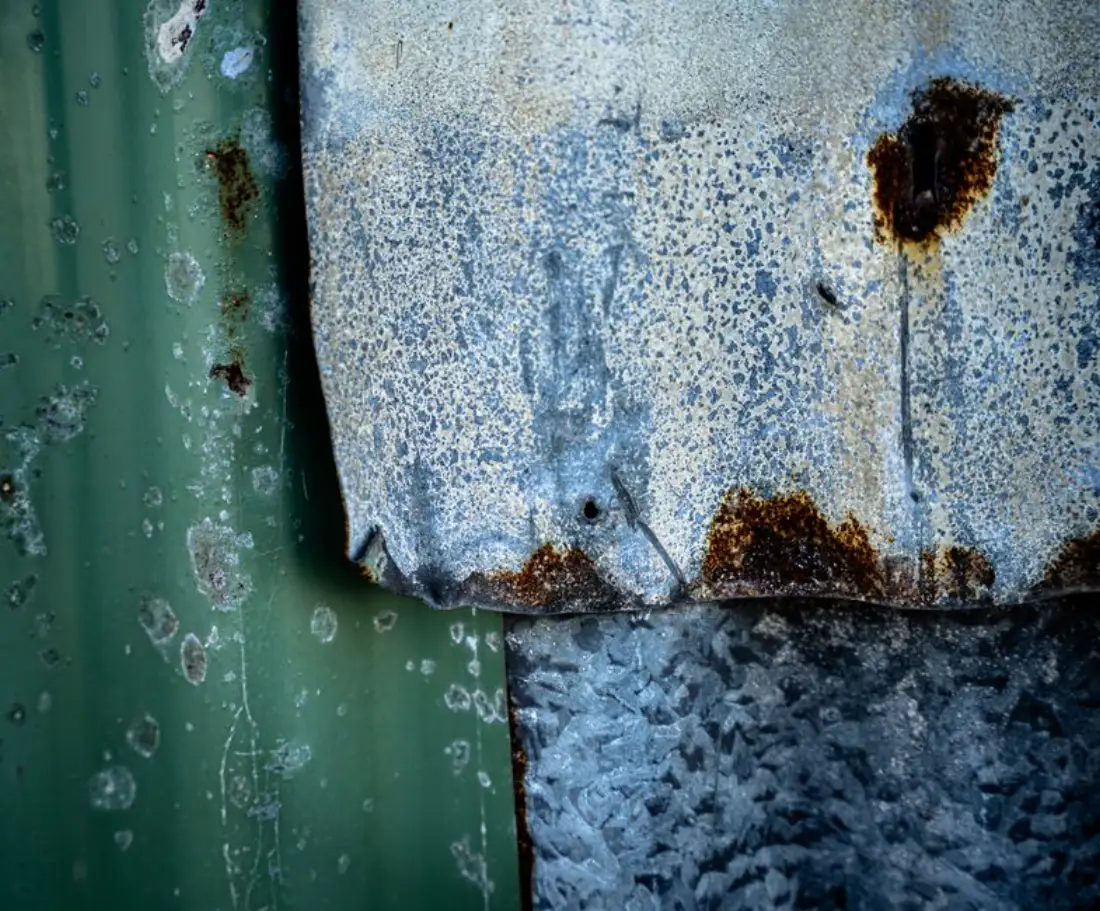
When two different metals meet and water is present, a galvanic cell forms and one of them starts to dissolve. It is the same physics as in a battery, only slower and on your facade. The Czech standard CSN 73 3610 for the design of sheet metal structures, from 2008, therefore sorts every pair of metals into three groups.
Three states under the standard
The materials may be in contact. Contact is better avoided. Contact must be ruled out, because the materials affect each other strongly and electrolytic corrosion occurs in the presence of water. The standard works only with these three states. Sealant put between two unsuitable metals is therefore not a solution it allows for.
What that means for the common metals
Copper is the strictest: contact with aluminium, titanium zinc, galvanised steel and steel must all be ruled out. It tolerates only lead and stainless steel. Titanium zinc must not meet copper or steel. Aluminium must not meet copper or steel. Unprotected steel tolerates nothing but stainless steel. Stainless steel is the one material the standard lets near all the others.
Two notes that decide the job
The first note under the table says that water running off copper structures contains copper ions, which can cause surface corrosion of aluminium, zinc, titanium zinc and galvanised steel, especially from larger copper areas. Those metals must therefore not be placed below copper structures. This is the case where the metals never touch and the problem arises anyway.
The second note says that water must be kept from running off unprotected steel structures onto any kind of sheet metal. A rusty beam above a new gutter is a fault in itself.
It is not only about metals
The standard covers the substrate too, because of the moisture it can hold. Structures bound with cement, lime or gypsum are unsuitable for aluminium, titanium zinc and galvanised steel. Timber with a pH below 4.5 is unsuitable for everything but copper, while timber with a pH above 4.5 is fine for every metal in the table. Which particular species falls on which side has to be checked; the standard gives its own list of species. For sheet with an organic coating the standard gives no answer and refers you to the maker of the coated sheet. In practice that means a titanium zinc sill bedded straight into mortar is a problem even with no second metal nearby.
How to avoid it
The simplest route is to unify the material. Where that is impossible, for instance on a historic building with copper parts, it is handled by keeping the two metals apart altogether and above all by making sure water from the copper never reaches an unsuitable metal below it. The judgement belongs to a sheet metal worker on site, because the actual build-up and the direction the water runs decide it.
Related reading: Sheet metal materials and the page on Flashing.