Gutters and downpipes: fitting and replacement
A rainwater system is the gutter, the brackets, the outlet, the downpipe, the bends and the shoe. Its job is to take water from the surface above and put it as far from the foundations as possible. If one of those parts does not fit, the water finds its way down the facade or into the plinth, and that is a more expensive problem than the gutter itself.
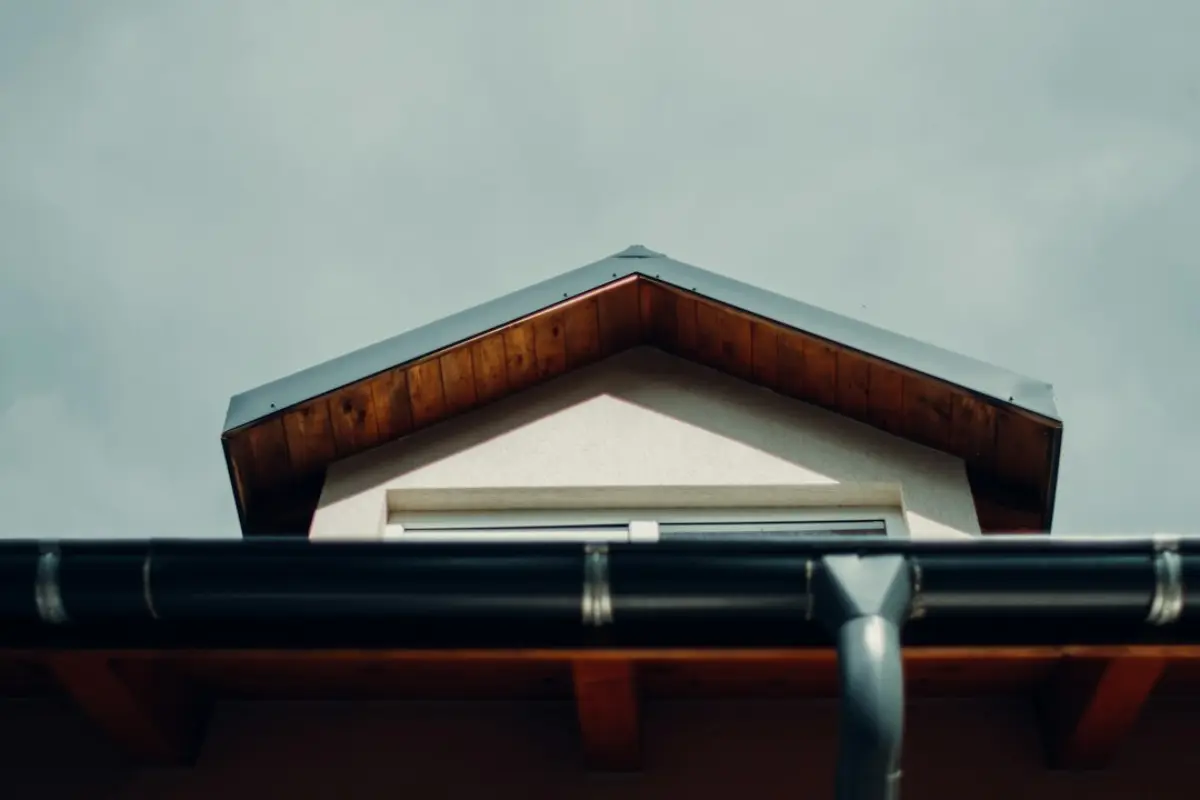
What a new rainwater system comes down to
The developed width of the gutter, meaning how wide a strip of sheet it is folded from, is chosen from the drained area and the pitch. A gutter that is too narrow overflows its outer edge in a downpour; one that is too wide makes every metre needlessly expensive. The number and spacing of downpipes follows the same calculation: one downpipe handles a certain area, and a long building needs several.
The fall of the gutter is the second thing a layperson never sees and a sheet metal worker spends the most time on. A gutter is not level, it drops towards the outlet. If the brackets are set with no fall, or against it, water stays in the gutter, ice in winter and sediment on the bottom. That is often why a new gutter behaves worse than the old one it replaced.
Replacing an old system
A replacement usually means new brackets too. The old ones tend to be corroded, loose, or fixed into a fascia board that is no longer sound. If the board under the gutter is rotten or the drip edge is damaged, that has to be put right before the new gutter goes up, or the same fault comes back.
The old system has to come down, be sorted and taken away. On larger houses that is a line of its own in the quote, not something done in passing.
Drip edges: a small part that decides a lot
A drip edge is the folded sheet along the eaves that throws water from the surface above into the gutter and keeps it from getting underneath the structure. Without one, a shallow pitch or driving rain sends water behind the gutter, where it starts breaking down the fascia board the brackets are fixed into. It is therefore normally changed together with the gutters, not separately.
A different part with a similar name is the facade drip bead, a mesh-backed profile fitted during insulation work along the bottom edge of the insulated surface and above window openings. It carries water away from the render on the same principle, just smaller and in another material. When a building is insulated, both get dealt with.
Plastic gutters, or metal
A plastic rainwater system is the cheapest to buy and quick to assemble. You pay for that elsewhere: plastic expands with heat far more than sheet metal, so the joints have to allow movement and they age, the material grows brittle from sun and frost, and the colour fades. It carries neither an ice load nor a leaning ladder.
A metal system, most often titanium zinc, lasts longer and takes more, but costs more and needs care about the metals around it. A rough rule: a low single-storey house where the gutter is easy to reach and the purchase price decides can take plastic. On a taller building, anywhere ice falls from the surface above, and wherever you want to forget about it for as long as possible, metal pays. A comparison of all the materials including plastic is in the table on the home page.
Material is not chosen on looks alone
On an ordinary family house titanium zinc will usually do. Copper lasts longest, but it must not meet aluminium, titanium zinc or galvanised steel, not even with one of them sitting below it. Plastic-coated steel solves matching the colour of windows and facade. The full table, including what the standard rules out, is on the home page.
Extras that earn their place
Leaf guards and protective mesh on a house under trees, a heating cable in the gutter and downpipe where ice plugs form every year, and snow guards above an entrance, a terrace or a parking space. Each of these is extra work, but each solves a specific repeating problem rather than an impression.
What to put in your enquiry
An approximate gutter length, the number of downpipes, the height of the building, the material of the current system and a photo of a corner all help. If you do not know, never mind: a photo and the town are enough. The measuring is done on site.
Frequently asked questions
How do I tell the fall of a gutter is wrong?
Standing water or a puddle stays in the gutter after rain, sediment settles on the bottom, and in winter ice forms in the same spot again and again. Where the water stands, the joint eventually starts to seep.
Can I replace only the downpipe and keep the gutter?
Yes, if the gutter is sound and the downpipe material goes with it under the standard. This is where mistakes happen most: a new aluminium downpipe under a copper gutter is a combination the standard rules out.
How many downpipes should a family house have?
It follows from the drained area and the position of the outlets, not from the length of the building. A broken-up design usually needs more than people expect. It is calculated during the site measurement.
Describe the job
A few sentences and the location are enough. We read every enquiry and pass it to a sheet metal firm that works in your area. If we have nobody there, we tell you straight away.