Custom sheet metal parts
Catalogue parts cover an ordinary house, but not every detail. As soon as there is an unusual dimension, a stepped parapet, a historic profile or a part that has to meet something else, the sheet is folded to measure.
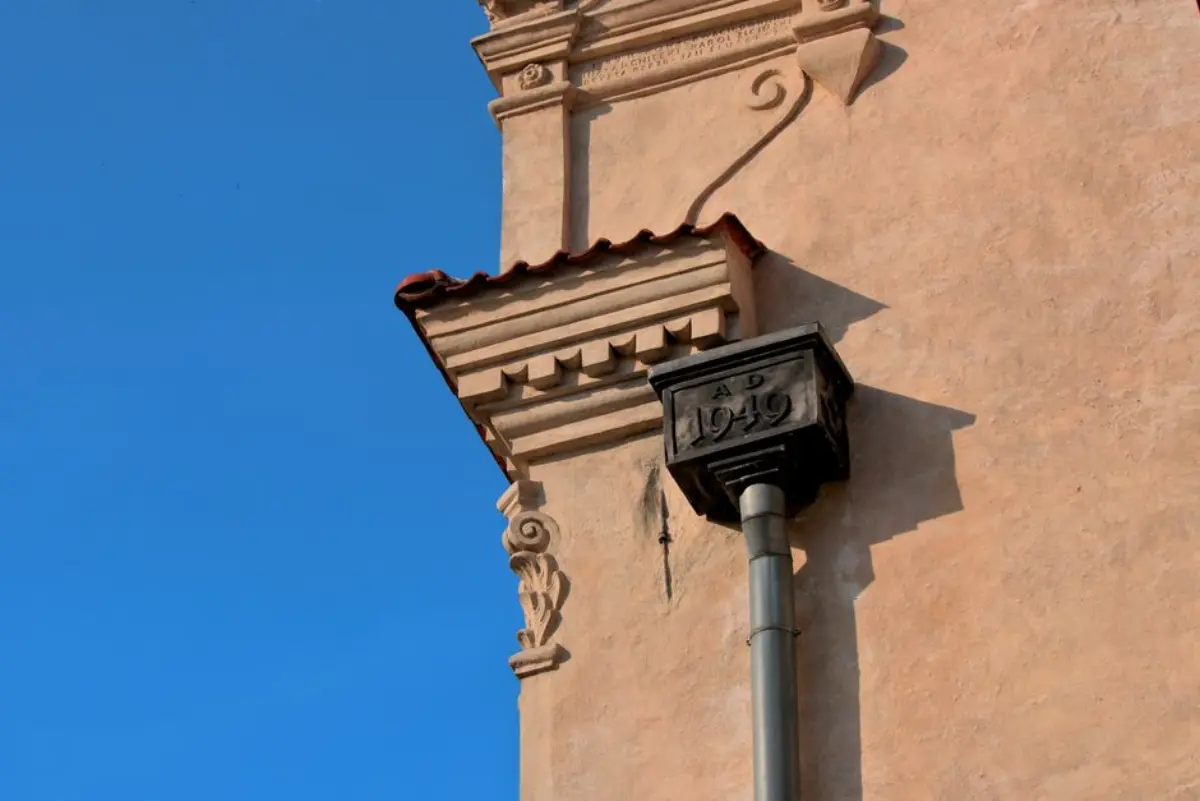
What gets made to measure
Cover and verge trims, drip edges, parapet cover sheets, outlets and downpipe shoes, trims around penetrations, flashing for cornices and eaves edges, valley sheets, and snow guards fixed to suit the particular structure. On historic buildings also replicas of original profiles that no catalogue carries.
How such a part is specified
A specification has three parts: the developed width, meaning how wide a strip the part is folded from; the order and angles of the folds; and the material. If the part meets existing metal, the material has to be compatible with what is already on the building. You cannot get round that by putting sealant between the metals. The standard speaks about contact and about water running off, so the problem arises even where the metals never touch.
Why improvising does not pay
A part with one fold fewer or a shorter overhang looks the same on the ground and, once up, lets water go where it should not. It happens most often with drip edges and with the side upstands of window sills, where a couple of centimetres decide whether water drips off or runs down the render.
Snow guards
A snow guard holds snow up top so it does not slide all at once onto an entrance, a terrace, a car, or onto the gutter, which it would tear off. It is not only about the part itself: the anchoring normally belongs in the load-bearing structure rather than in the covering, and the spacing follows from the pitch and the area above the guard. The exact fixing method is prescribed by the maker of the guard.
What to put in your enquiry
A description of where the part goes, a photo of the spot and, if you can, a sketch or dimensions. For a replica, one photo of the original piece from the side is worth more than ten from the front.
Frequently asked questions
Can a copy of an original drip edge from a historic building be made?
Usually yes. What is needed is the profile, so a photo from the side or an offcut of the original piece. The developed width and the order of folds follow from that.
Can I have copper parts on a building with galvanised gutters?
Under the standard this is a combination to be ruled out, even where the metals never touch. Water running off copper attacks galvanised steel across the surface. Either the material is unified, or the parts are arranged so that water from the copper never reaches the zinc.
How are snow guards fixed?
Normally into the load-bearing structure under the covering rather than into the covering itself, with the exact method prescribed by the maker of the guard. Spacing follows from the pitch and the area above the guard. A badly fixed guard tears out whatever it is screwed into as soon as snow loads it.
Describe the job
A few sentences and the location are enough. We read every enquiry and pass it to a sheet metal firm that works in your area. If we have nobody there, we tell you straight away.