External window sills: fitting and replacement
An external sill is the smallest and most underrated sheet metal part on a building. It is a folded sheet under the window whose job is to take water away from the masonry and from the frame. If it is too short, badly set or left open at the sides, water runs along the reveal into the opening and shows up inside rather than outside.
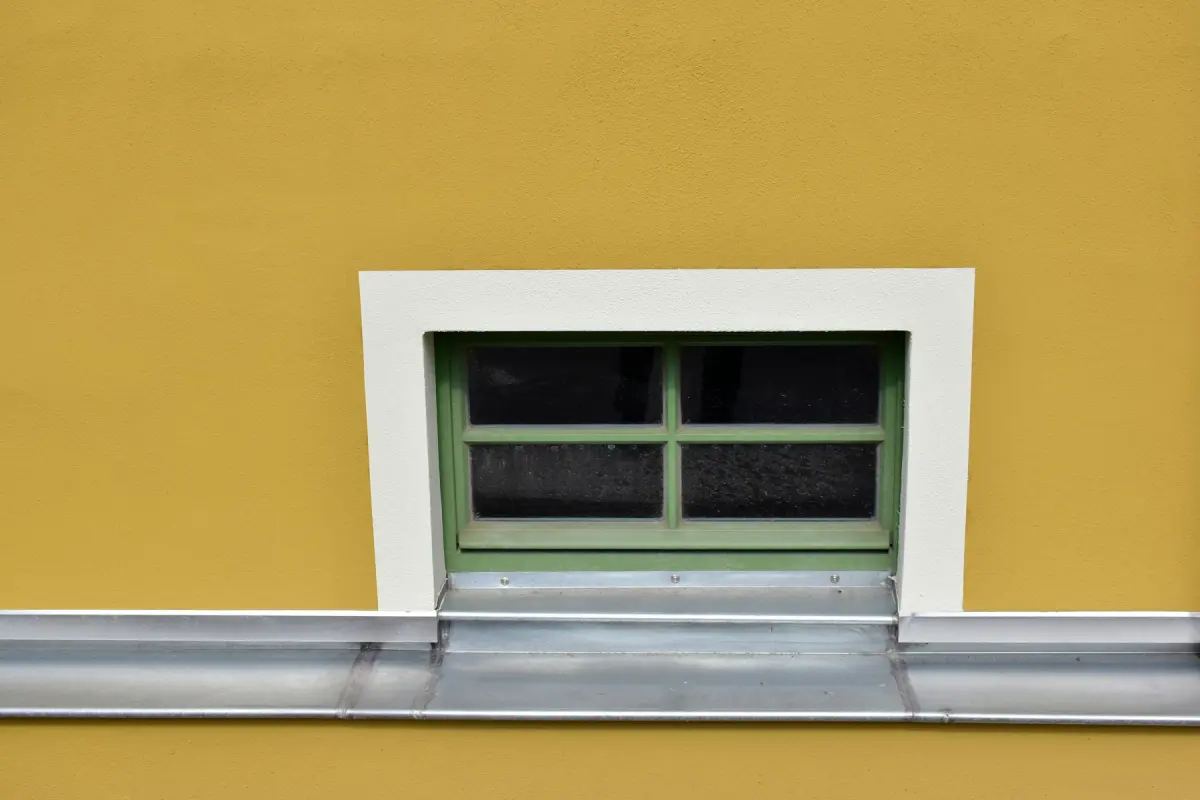
What an external sill has to do
Four things, and all of them only show after rain. Overhang, so that water drips clear of the facade rather than down it. A drip nose, the folded front edge that makes water fall instead of being drawn back under the sheet. Fall away from the window, so that water drains at all and does not stand against the frame. And side upstands, which keep the water on the sill and out of the reveal.
Missing side upstands are the most common fault a layperson never notices. The sheet looks straight, but in driving rain water runs off sideways, gets behind the reveal, and a few years later a damp patch appears inside the room next to the window.
The junction with the reveal
A sill must not simply be pushed under the frame and foamed in place. The sides have to be let into the reveal and sealed so water cannot pass behind them, and the back edge has to run under the window frame rather than stop in front of it. The junction with the reveal is exactly where time gets saved and where it shows later.
Sills on an insulated facade
Insulation moves the facade outwards by its own thickness. A sill that was fine before suddenly has too little overhang and water runs straight down the new render. That is why sills are normally remade when a building is insulated, longer, with their sides meeting the newly formed reveal. An old sill can sometimes be extended with an add-on piece, but a joint in the middle of a sill is one more place water can get through.
What external sills are made of
Most often plastic-coated or lacquered steel, because the colour can be matched to the windows. Then titanium zinc, aluminium, and on representative buildings copper. The same rule about neighbouring metals applies as with gutters: if the building has copper parts, an aluminium or titanium zinc sill does not belong beneath them. Stone and concrete sills are a different trade.
What about internal sills
An internal sill is a separate matter and usually not sheet metal work at all. It is made of coated chipboard, plastic, stone or an engineered material, and fitted by a joiner or a stonemason. External and internal sills are related only in that both meet the window frame, and the internal one often gets changed in the same job.
When to replace a sill
When it is shorter than the overhang the facade needs. When it has no upstands at the sides. When it is rusted through or the coating is punctured. When there is a damp joint visible beneath it, or patches appear by the window inside. And whenever the facade is insulated, because the original size no longer fits.
What to put in your enquiry
The number of windows, the approximate depth of the sill from the frame outwards, whether the building is going to be insulated, and a photo of one window from outside. A photo says more than a description, above all about the sides and what is happening at the reveal.
Frequently asked questions
How far should an external sill project?
Far enough that water drips clear of the facade rather than down it, and that together with the drip nose on the front edge it carries the water away. The actual figure follows from the thickness of the wall and from whether the facade is insulated. It is measured on site, from the frame outwards.
Do sills have to be redone when a house is insulated?
Usually yes. Insulation moves the facade outwards and the existing sill no longer has enough overhang. A short sill lets water into the reveal, which is especially unwelcome on a freshly insulated facade.
Water is getting into the opening beside my window. Is the sill to blame?
Very often yes, and it is usually a side upstand that is missing or not sealed into the reveal. In driving rain the water then runs off sideways and gets behind the facade. Other places are worth checking, but the sill is where you start.
Describe the job
A few sentences and the location are enough. We read every enquiry and pass it to a sheet metal firm that works in your area. If we have nobody there, we tell you straight away.